
Why Your Business Website Needs to Be Built Right the First Time

In today's digital-first economy, your website is your most visible business asset. It is the first impression a potential client forms about your company and research consistently shows that users make judgements about credibility within seconds of landing on a page. A poorly built website does not just look unprofessional; it actively costs you business.
The Foundation: Clean Architecture
A well-built website starts with solid architectural decisions. This means separating concerns between front-end presentation and back-end logic, choosing a technology stack appropriate for your scale, and designing with future growth in mind. Developers who cut corners on architecture create technical debt that compounds over time features become harder to add, bugs become harder to trace, and performance degrades as traffic grows.
Modern web development frameworks such as React, Next.js, and Vue.js offer component-based architectures that make codebases maintainable and scalable. Paired with robust back-end solutions like Node.js, Django, or Laravel, they form the backbone of websites that can grow alongside your business.
Performance Is Not Optional
Page speed is directly tied to revenue. A one-second delay in page load time can reduce conversions by up to 7%. Google's Core Web Vitals Largest Contentful Paint, First Input Delay, and Cumulative Layout Shift are now ranking signals, meaning a slow website does not just frustrate users; it disappears from search results.
Performance engineering involves image optimisation, lazy loading, code splitting, content delivery networks (CDNs), and server-side rendering where appropriate. These are not afterthoughts they should be built into the development process from day one.
Mobile-First Is the Only Approach
Over 60% of global web traffic now comes from mobile devices. A mobile-first development approach means designing and building for smaller screens first, then progressively enhancing for larger ones. This results in faster, leaner experiences for the majority of your users rather than a desktop experience awkwardly squeezed onto a phone screen.
Accessibility Builds a Bigger Audience
WCAG accessibility standards exist to ensure that websites are usable by people with disabilities including those who rely on screen readers, keyboard navigation, or high-contrast displays. Beyond the ethical imperative, accessibility is increasingly a legal requirement in many jurisdictions. Building accessibly from the start is far less costly than retrofitting compliance later.
Security From the Ground Up
Injection attacks, cross-site scripting, and insecure direct object references are among the most common web vulnerabilities. Secure development practices input validation, parameterised queries, HTTPS enforcement, and dependency management protect your users and your reputation. A single data breach can permanently damage the trust your brand has built.
Conclusion
Building a website right the first time requires investment in architecture, performance, mobile experience, accessibility, and security. The businesses that treat their website as a strategic asset rather than a one-time task consistently outperform those that do not. Partner with a development team that understands all five dimensions.
Recent Blog
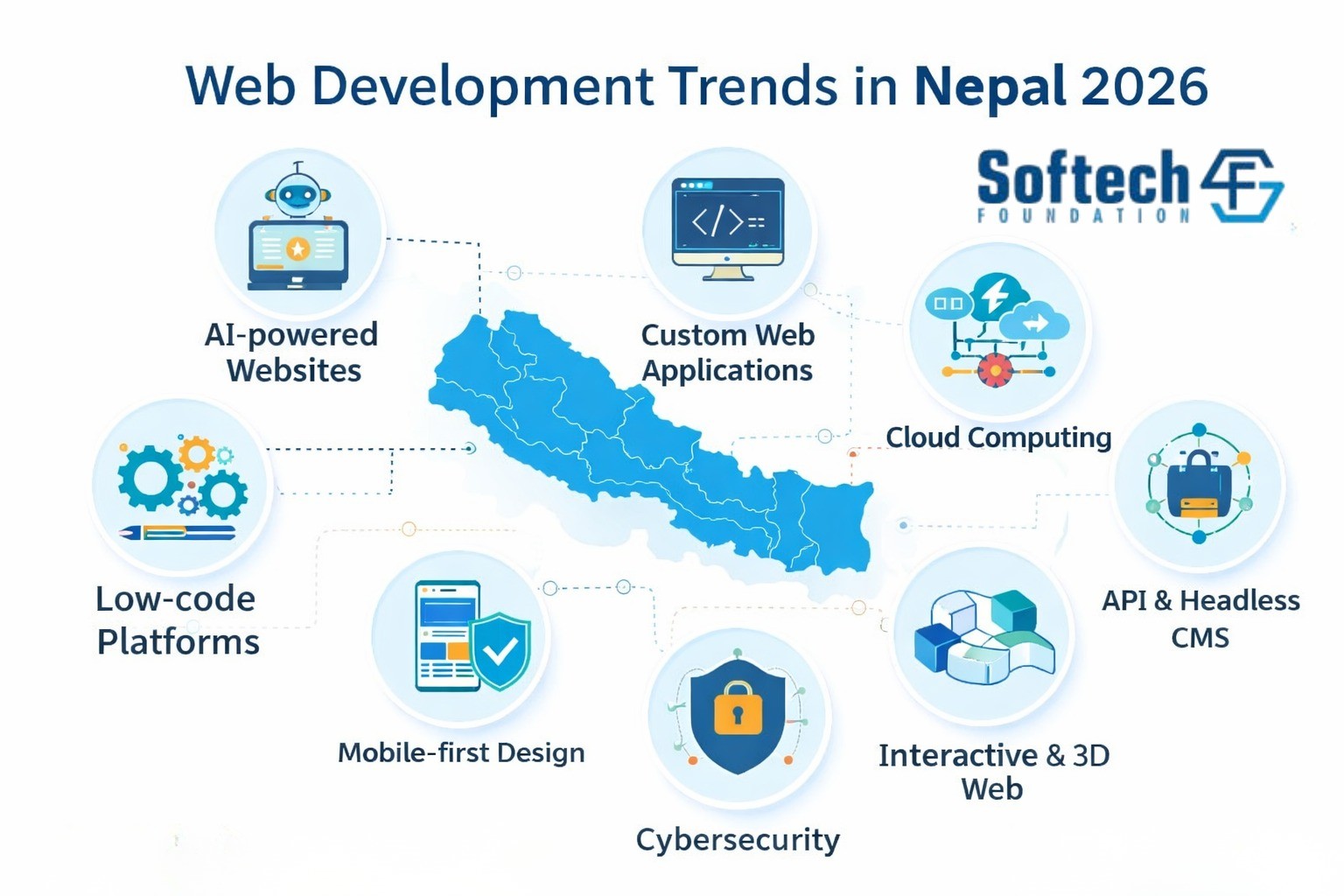
🌐 Web Development Trends in Nepal 2026
Read More..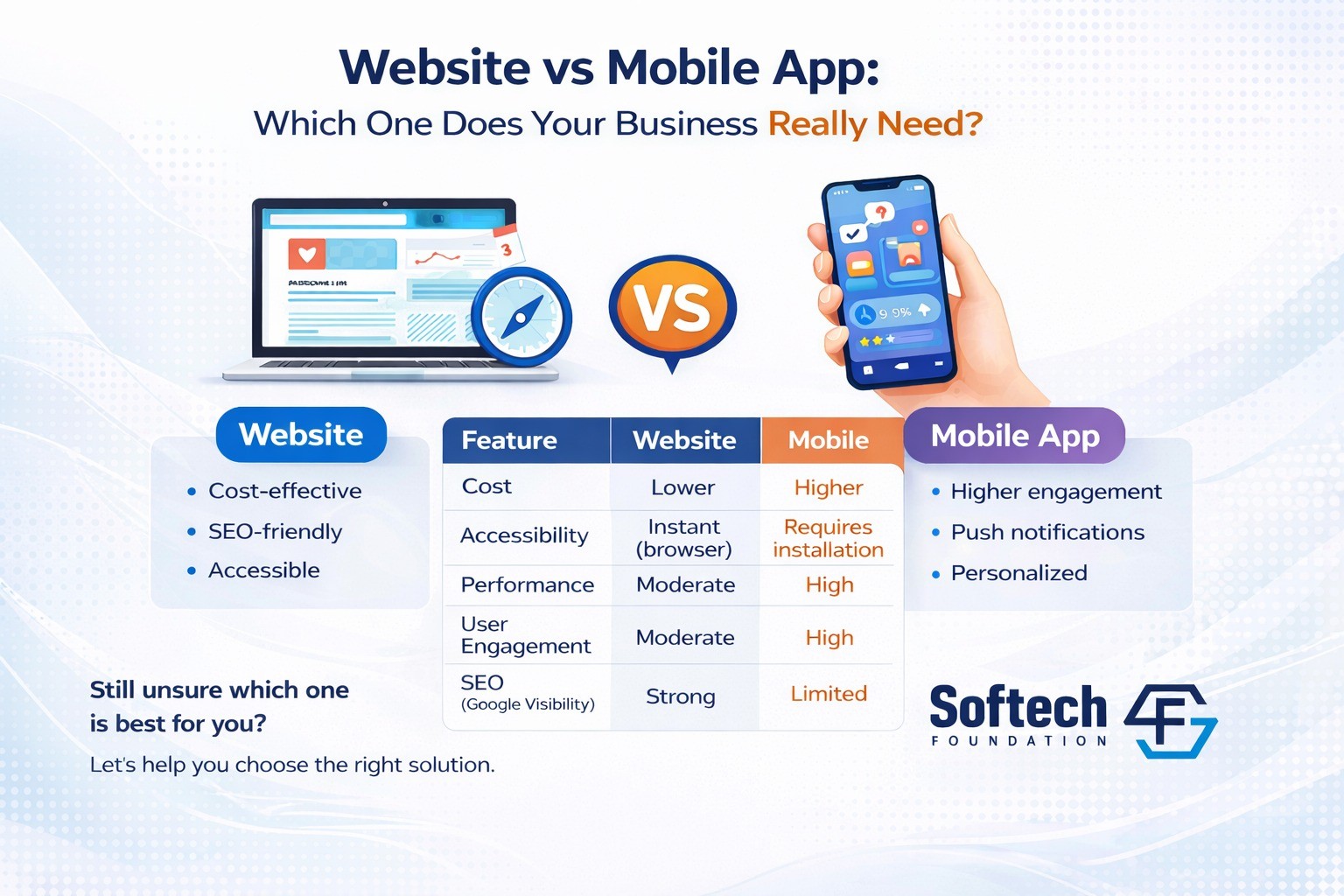
Website vs Mobile App: Which One Does Your Business Really Need?
Read More..
What is Data Analytics?
Read More..