
The Power of Cloud Computing in Modern Business

In today’s fast-moving digital world, businesses are no longer limited by physical infrastructure. Cloud computing has completely transformed how organizations store data, run applications, and scale operations. It allows companies to operate smarter, faster, and more efficiently than ever before.
What is Cloud Computing?
Cloud computing is the delivery of computing services—such as servers, storage, databases, networking, and software—over the internet. Instead of owning physical hardware, businesses can access resources on demand from cloud providers.
This means no heavy investment in infrastructure and no maintenance headaches.
Why Cloud Computing Matters
Cloud computing is not just a trend—it is a necessity for modern businesses. Whether you are a startup or an enterprise, cloud technology helps you stay competitive in a digital-first world.
Key Benefits of Cloud Computing
1. Cost Efficiency
Businesses only pay for what they use. No need for expensive servers or IT infrastructure. This significantly reduces operational costs.
2. Scalability & Flexibility
Cloud systems can easily scale up or down based on your business needs. Whether you grow fast or face seasonal demand, the cloud adapts instantly.
3. Remote Accessibility
Teams can access data and applications from anywhere. This enables remote work, better collaboration, and increased productivity.
4. Data Security
Modern cloud providers offer advanced security features like encryption, backups, and disaster recovery to protect your data.
5. Faster Deployment
Cloud solutions can be deployed quickly, helping businesses launch products and services faster than traditional systems.
Types of Cloud Computing
Public Cloud – Services provided over the internet (e.g., AWS, Azure)
Private Cloud – Dedicated cloud for a single organization
Hybrid Cloud – Combination of public and private cloud
Challenges to Consider
While cloud computing offers many advantages, businesses should also consider:
Data privacy concerns
Internet dependency
Vendor lock-in risks
Choosing the right cloud provider and strategy is important.
Conclusion
Cloud computing is the backbone of digital transformation. It empowers businesses to innovate, scale, and compete globally. Companies that adopt cloud technology today are better prepared for the future.
Recent Blog
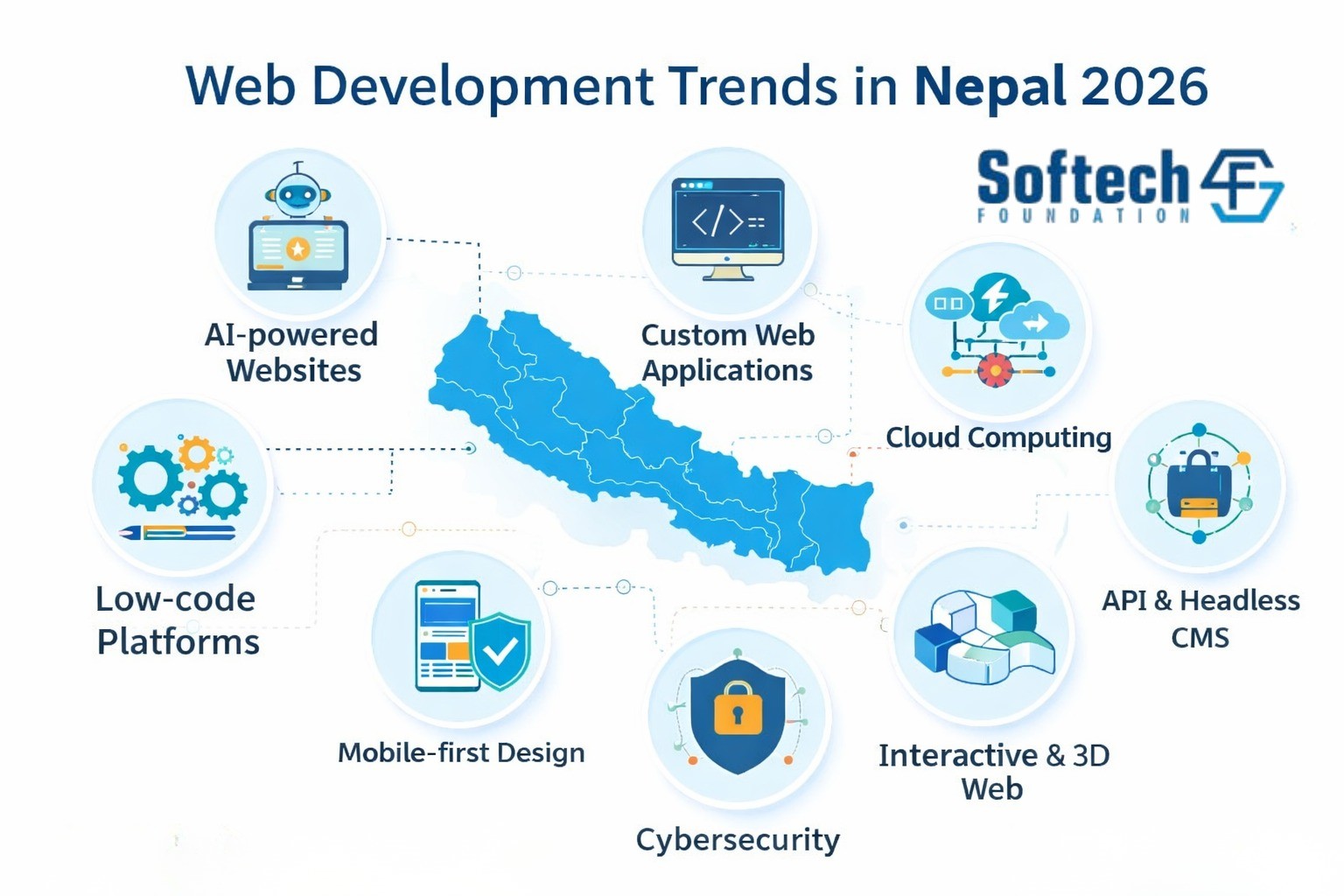
🌐 Web Development Trends in Nepal 2026
Read More..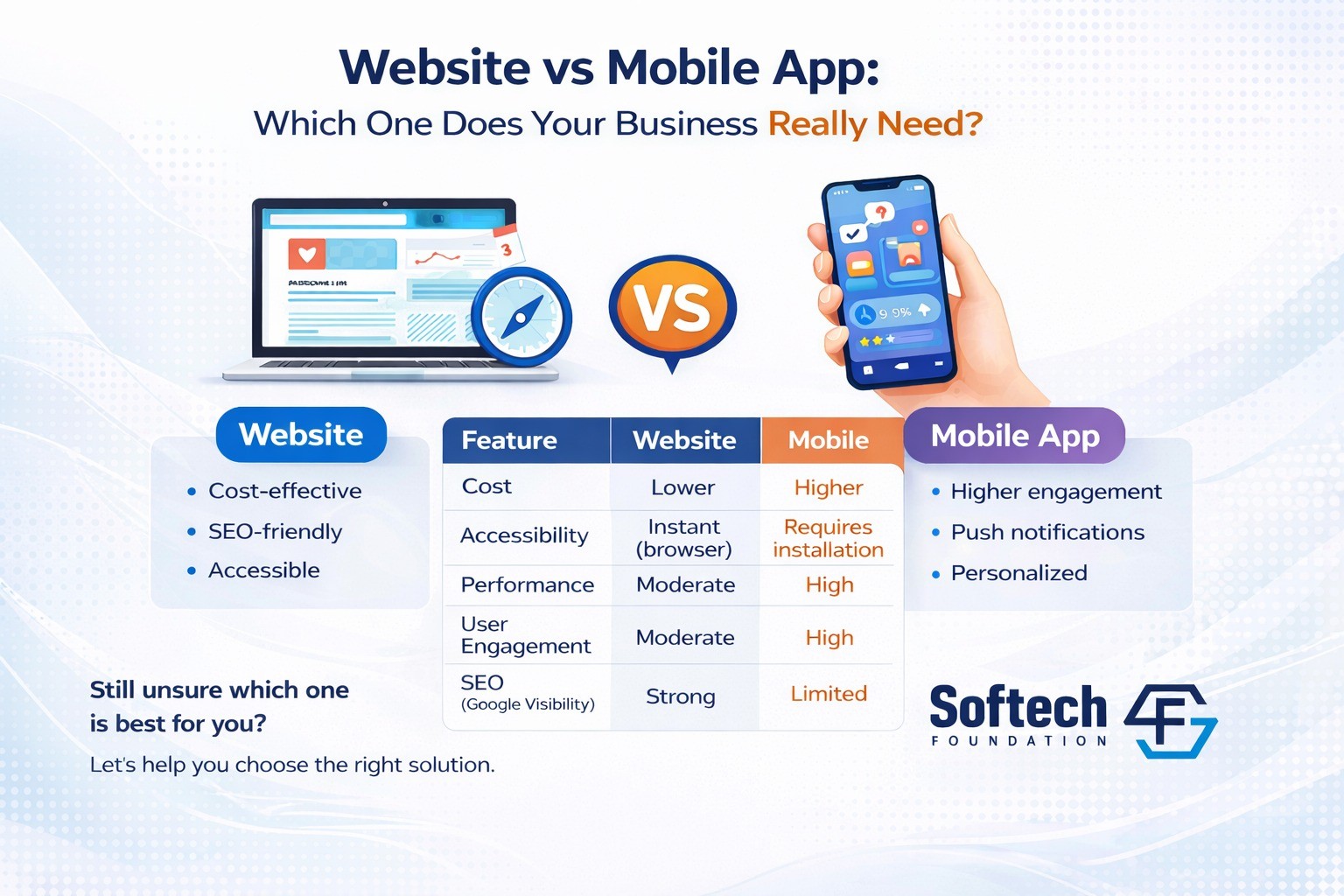
Website vs Mobile App: Which One Does Your Business Really Need?
Read More..
What is Data Analytics?
Read More..