
What is Data Analytics?
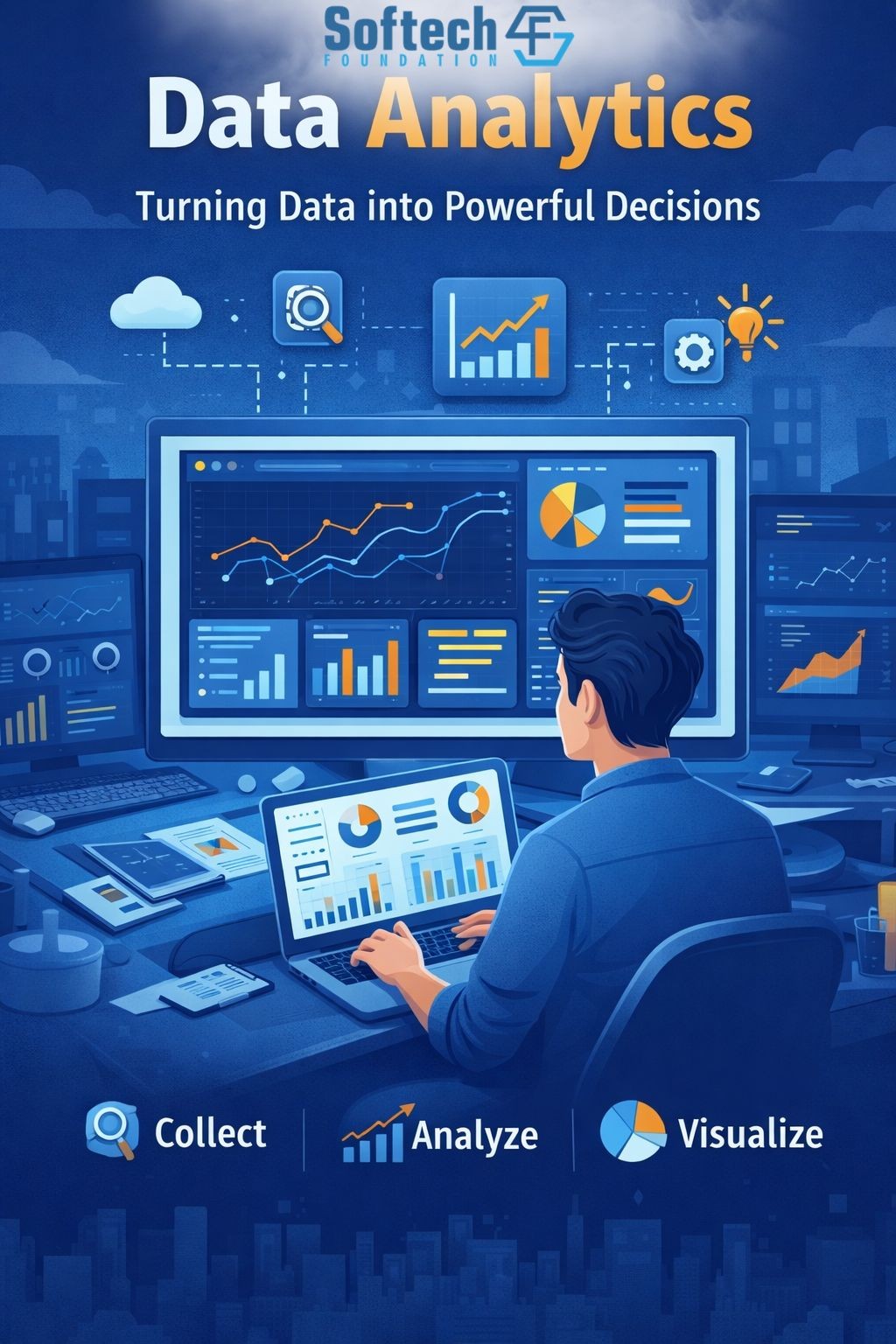
In today’s digital age, businesses generate massive amounts of data every second. But raw data alone has no value unless it is analyzed and transformed into meaningful insights. This is where Data Analytics plays a crucial role.
Data analytics helps organizations make smarter decisions, improve performance, and gain a competitive advantage.
What is Data Analytics?
Data analytics is the process of collecting, organizing, analyzing, and interpreting data to discover useful information and support decision-making.
It involves tools, technologies, and techniques to turn complex data into clear insights.
Types of Data Analytics
1. Descriptive Analytics
This type explains what happened in the past.
Example: Monthly sales reports
2. Diagnostic Analytics
Focuses on why something happened.
Example: Why sales dropped in a specific month
3. Predictive Analytics
Uses data to predict future trends.
Example: Forecasting future sales
4. Prescriptive Analytics
Suggests what actions to take.
Example: Recommending strategies to increase profit
Key Tools Used in Data Analytics
Microsoft Excel – Basic data analysis and visualization
SQL – Managing and querying databases
Python – Advanced analytics and automation
Power BI / Tableau – Data visualization and dashboards
R Programming – Statistical analysis
Data Analytics Process
Data Collection – Gathering data from various sources
Data Cleaning – Removing errors and inconsistencies
Data Processing – Organizing data into usable formats
Data Analysis – Applying statistical methods
Data Visualization – Presenting data through charts and dashboards
Decision Making – Using insights for business growth
Importance of Data Analytics
✔ Helps in better decision-making
✔ Identifies trends and patterns
✔ Improves efficiency and productivity
✔ Enhances customer experience
✔ Reduces risks and costs
Real-World Applications
Data analytics is used in many industries, including:
Healthcare – Patient data analysis and disease prediction
Finance – Fraud detection and risk management
E-commerce – Customer behavior tracking
Marketing – Campaign performance analysis
Education – Student performance tracking
Skills Required for Data Analytics
To become a data analyst, you should learn:
Data visualization
Statistical analysis
Programming (Python/R)
SQL and database management
Critical thinking and problem-solving
Conclusion
Data analytics is one of the most in-demand fields in the modern world. It empowers businesses to make data-driven decisions and stay ahead in a competitive market.
Whether you are a student or a professional, learning data analytics can open doors to exciting career opportunities and help you become a valuable asset in any organization
Recent Blog
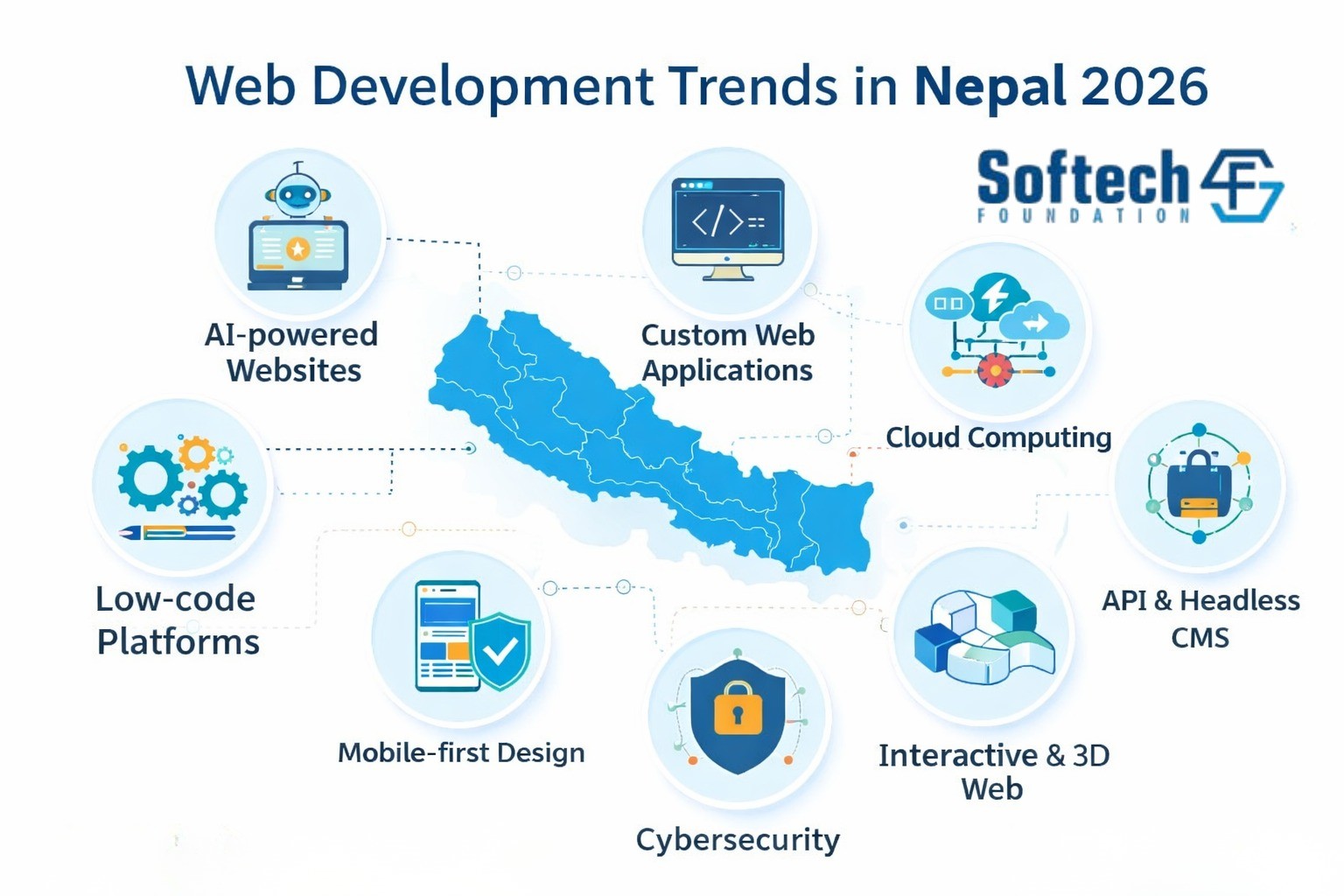
🌐 Web Development Trends in Nepal 2026
Read More..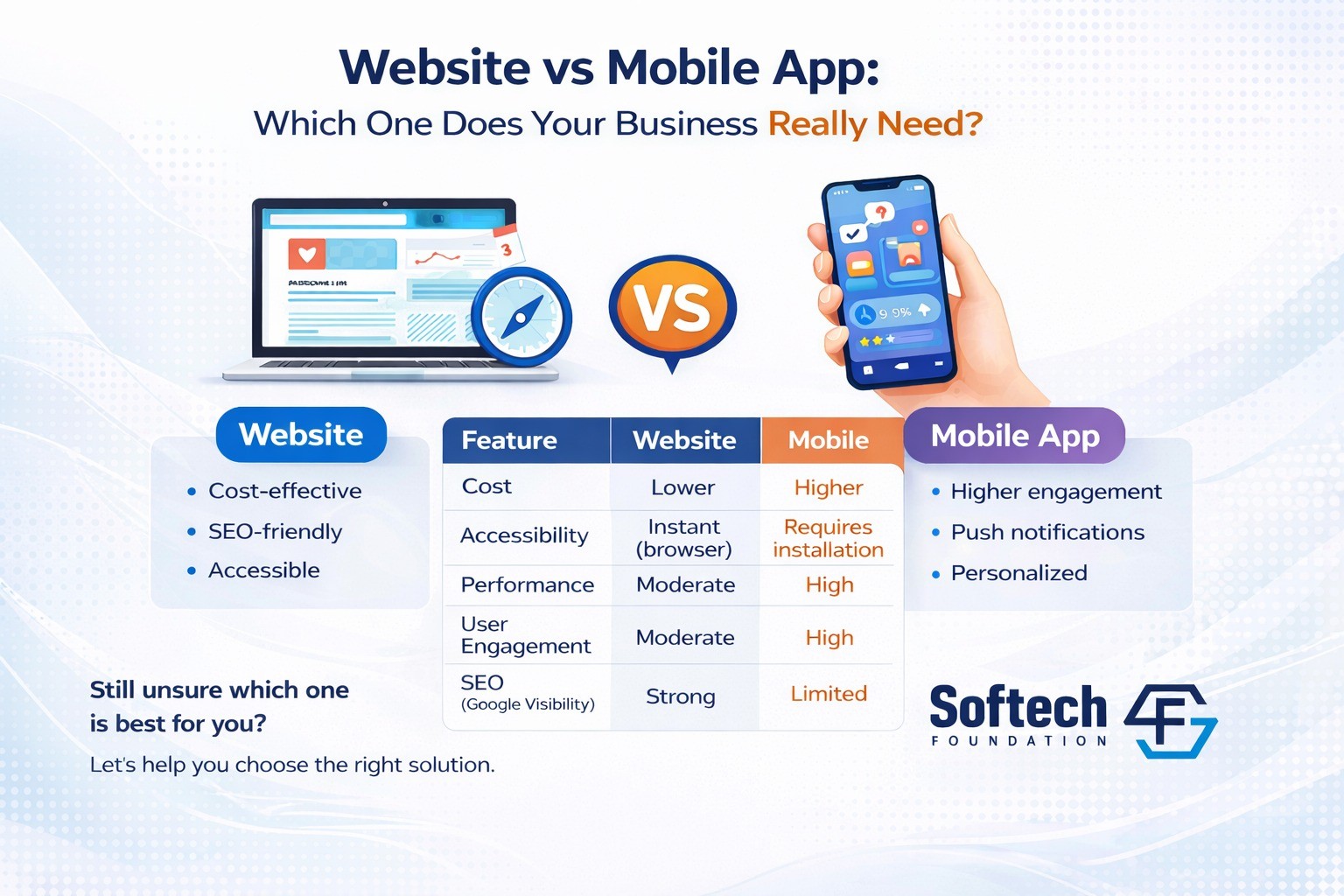
Website vs Mobile App: Which One Does Your Business Really Need?
Read More..
What is Data Analytics?
Read More..