
Why Companies Are Moving to Multi-Cloud—and How to Design a Hybrid Architecture That Actually Works?
Introduction
What happens when your entire system depends on a single cloud—and it goes down?
Not slows down.
Not partially fails.
Completely stops.
For years, businesses chose a single cloud provider for simplicity. It worked—until scale, global demand, and real-world failures exposed its limitations.
Today, organizations are shifting toward multi-cloud and hybrid architectures—not because it’s a trend, but because it solves real business problems: vendor lock-in, downtime risk, compliance constraints, and performance bottlenecks.
However, adopting multiple clouds does not automatically create a better system.
The real advantage comes from how the architecture is designed.
Why Single-Cloud Is No Longer Enough?
At the early stage, single-cloud architecture offers speed and simplicity. But as systems grow, several limitations begin to appear.
1. Vendor Lock-In
When all infrastructure depends on a single provider, switching becomes difficult and costly. Organizations become tightly coupled to one ecosystem, limiting flexibility and negotiation power.
2. Downtime Risk
Even leading cloud providers experience outages. In a single-cloud setup, this can bring the entire system offline.
3. Compliance and Data Residency
Different regions have different regulatory requirements. A single provider may not support all necessary compliance standards or data location controls.
4. Performance Limitations
Users distributed across different geographies may experience higher latency if services are centralized in one cloud region.
Multi-Cloud vs Hybrid Cloud
It is important to distinguish between these two approaches:
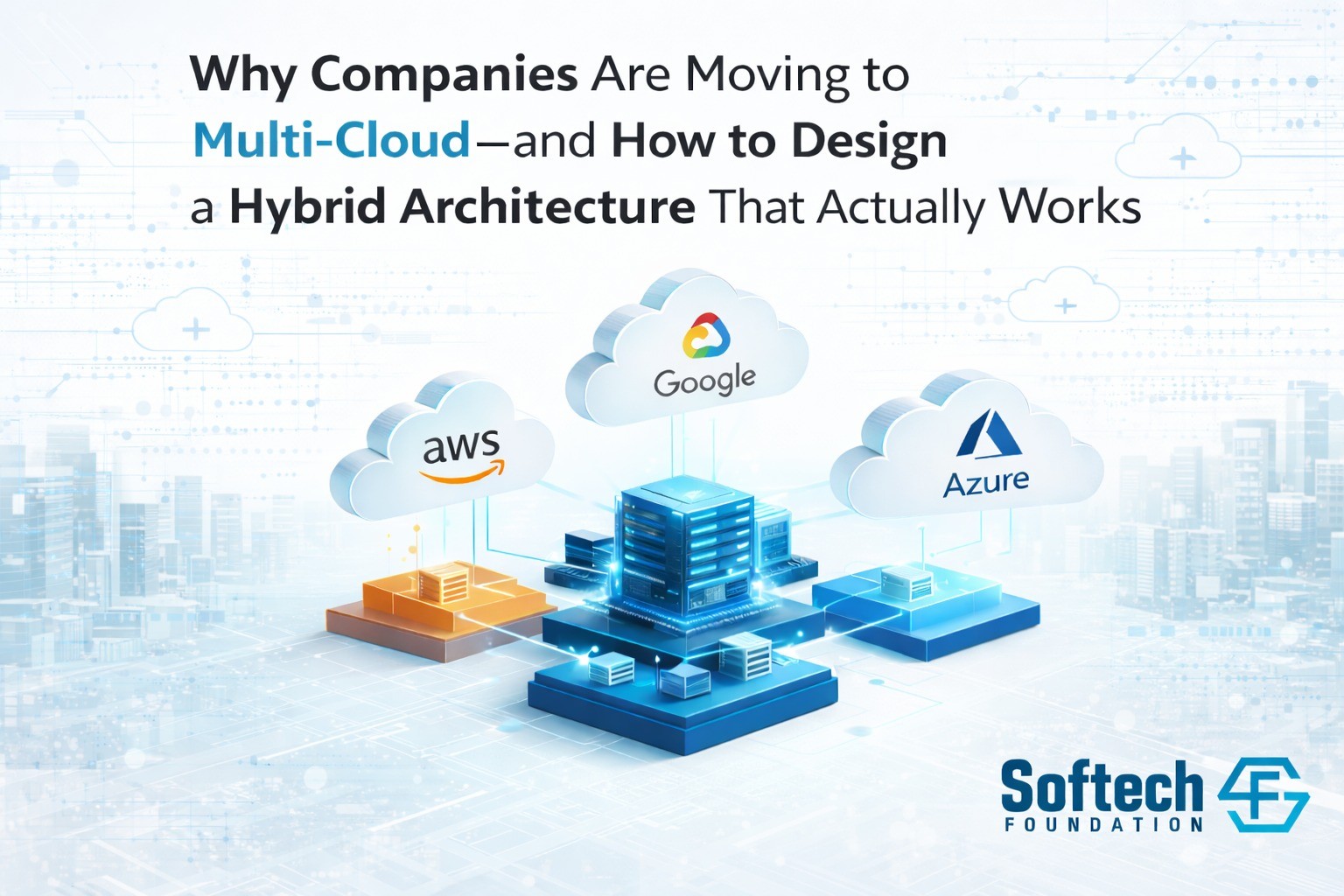
• Multi-Cloud: Using multiple cloud providers such as AWS, Azure, and GCP
• Hybrid Cloud: Combining on-premise infrastructure with cloud services
Most modern systems use a combination of both, depending on business and technical requirements.
Why Organizations Are Moving to Multi-Cloud?
1. Flexibility and Service Optimization
Each cloud provider offers unique strengths. Multi-cloud allows organizations to choose the most suitable service for each workload rather than relying on a single ecosystem.
2. Improved Reliability
Distributing workloads across multiple providers reduces the risk of total system failure. If one provider experiences issues, others can continue to operate.
3. Cost Optimization
Different providers offer competitive pricing in different areas. Strategic distribution of workloads can lead to more efficient cost management.
4. Better Compliance and Data Control
Organizations can store sensitive data on-premise while using specific regions or providers to meet regulatory requirements.
The Challenge of Multi-Cloud
While multi-cloud offers clear advantages, it also introduces complexity.
Without proper planning, organizations may face:
• Increased operational overhead
• Security inconsistencies
• Data synchronization issues
• Fragmented monitoring and logging
This makes architecture design critical to success.
How to Design a Hybrid Architecture That Works?
1. Define Workload Separation Clearly
Not every system needs to be distributed across multiple clouds.
Identify:
• What remains on-premise
• What moves to the cloud
• Which cloud is best suited for each workload
Avoid unnecessary complexity during the early stages.
2. Use Containers and Kubernetes
Containerization (Docker) and orchestration (Kubernetes) provide portability and consistency across environments.
They enable applications to run reliably across different cloud providers without major modifications.
3. Establish a Strong Networking Layer
A well-designed network ensures:
• Secure communication between environments
• Low latency and efficient routing
• Reliable connectivity
Common solutions include VPNs, VPC peering, and service mesh technologies.
4. Centralize Identity and Access Management
Managing security across multiple environments requires a unified approach.
Implement:
• Centralized authentication
• Single Sign-On (SSO)
• Consistent access policies
This reduces risk and simplifies management.
5. Unify Monitoring and Logging
Operating multiple systems requires a single source of visibility.
Use centralized monitoring tools to track performance, logs, and system health across all environments.
6. Design for Failure
Systems should be built with the expectation that failures will occur.
Key considerations:
• Automatic failover
• Retry mechanisms
• Graceful degradation
This ensures continuity even during unexpected disruptions.
Example Architecture
A practical hybrid multi-cloud setup may include:
• On-premise infrastructure for sensitive data
• One cloud provider for core backend services
• Another cloud provider for analytics or AI processing
• Content delivery network (CDN) for global distribution
All components are connected through secure networking and managed through centralized systems.
Common Mistakes to Avoid
• Adopting multi-cloud without a clear business need
• Underestimating operational complexity
• Poor security integration
• Lack of unified monitoring
• Overengineering systems too early
Final Thoughts
Multi-cloud and hybrid architectures are becoming increasingly common as organizations scale and operate globally.
However, success does not come from simply using multiple cloud providers. It comes from designing systems that are efficient, resilient, and aligned with real business requirements.
Key Takeaway
Start with a clear architecture. Focus on solving real problems. Introduce multi-cloud only when it provides measurable value.
Recent Blog
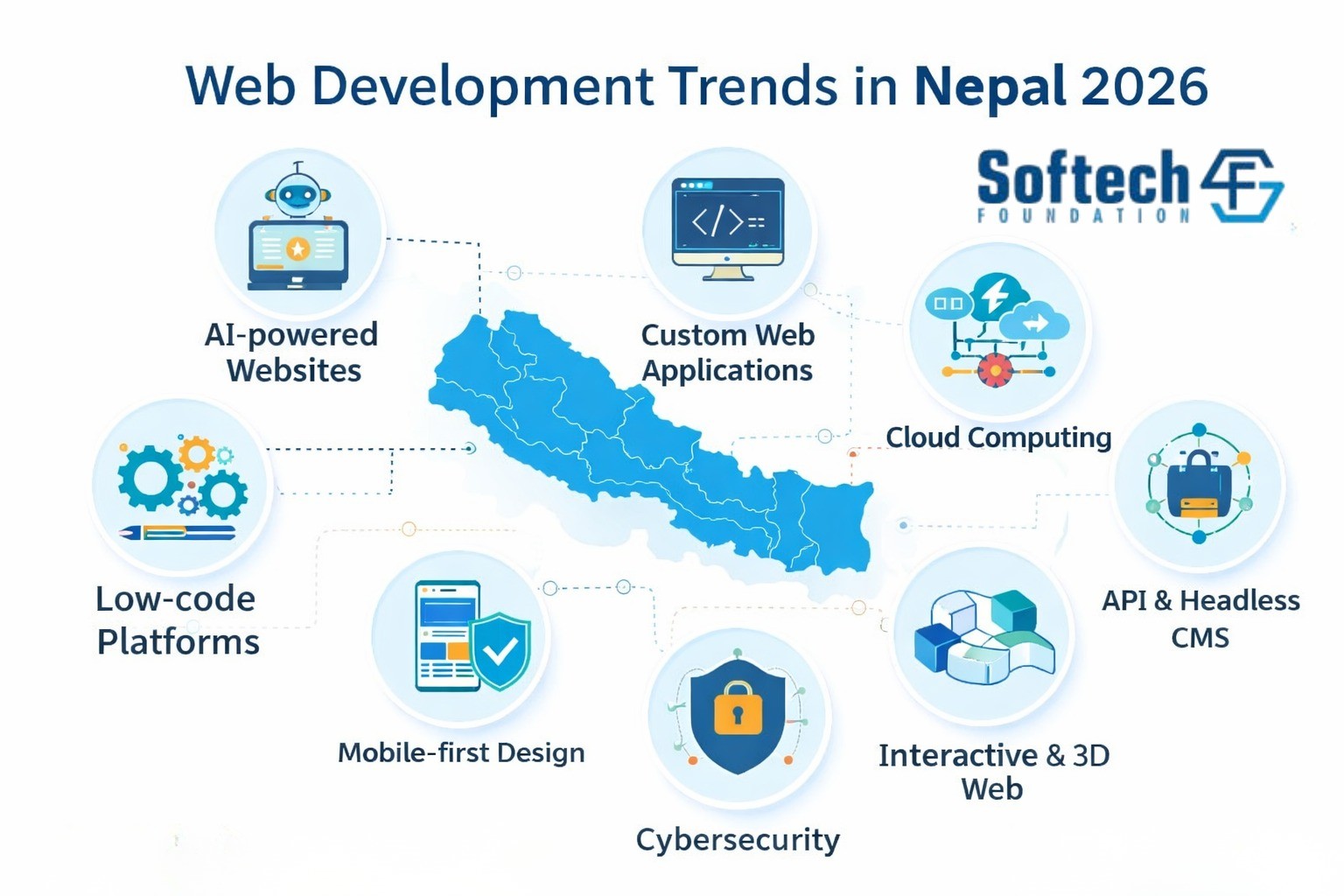
🌐 Web Development Trends in Nepal 2026
Read More..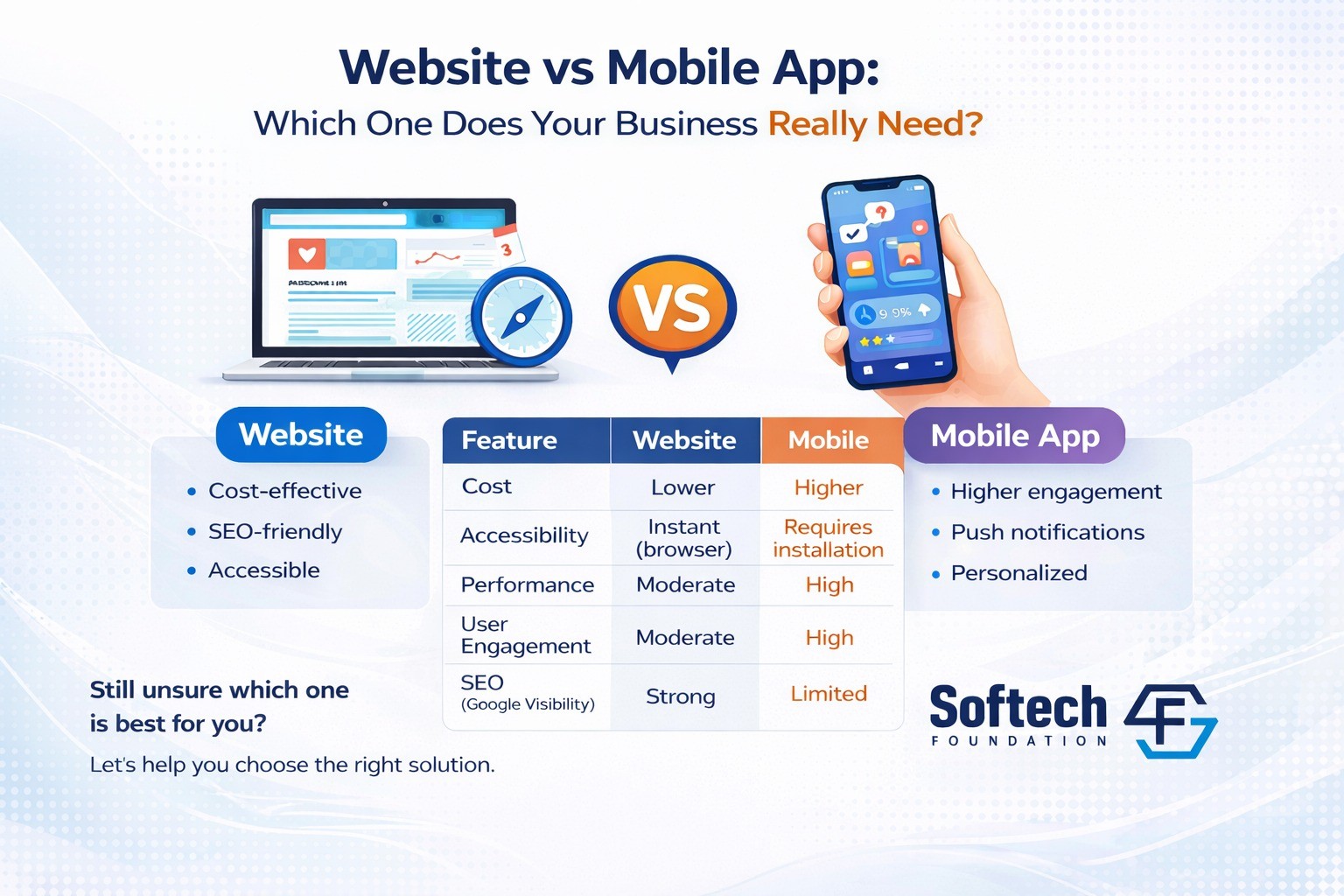
Website vs Mobile App: Which One Does Your Business Really Need?
Read More..
What is Data Analytics?
Read More..