
Introduction to Machine Learning:

Machine Learning (ML) is one of the most exciting and rapidly growing fields in technology today. It is a branch of Artificial Intelligence that enables computers to learn from data and improve their performance without being explicitly programmed.
Instead of following fixed instructions, machine learning systems analyze patterns in data and make decisions based on what they learn. This makes them highly useful in solving real-world problems.
How Machine Learning Works:
At its core, machine learning involves three main steps:
Data Collection – Gathering relevant data from various sources
Training the Model – Feeding data into algorithms to learn patterns
Prediction/Decision Making – Using the trained model to make predictions
For example, a machine learning model can learn to identify spam emails by analyzing thousands of past emails.
Types of Machine Learning
1. Supervised Learning
In supervised learning, the model is trained using labeled data. This means the input comes with the correct output.
Example: Predicting house prices based on size, location, and features.
2. Unsupervised Learning
Here, the model works with unlabeled data and tries to find hidden patterns.
Example: Customer segmentation in marketing.
3. Reinforcement Learning
In this type, the model learns by interacting with its environment and receiving rewards or penalties.
Example: Training robots or game-playing AI.
Applications of Machine Learning
Machine learning is used in many areas of our daily lives:
Healthcare – Disease prediction and diagnosis
Finance – Fraud detection and risk analysis
E-commerce – Product recommendations
Social Media – Content personalization
Transportation – Self-driving cars
Popular platforms like Google, Amazon, and Netflix heavily rely on machine learning to enhance user experience.
Advantages of Machine Learning
Automates decision-making processes
Handles large amounts of data efficiently
Improves accuracy over time
Enables personalized user experiences
Challenges of Machine Learning
Requires large datasets
Can be complex to build and maintain
Risk of bias in data
High computational cost
Future of Machine Learning
The future of machine learning is incredibly promising. With advancements in computing power and data availability, ML will continue to transform industries. Technologies like self-driving cars, smart assistants, and advanced robotics are becoming more realistic every day.
Conclusion
Machine learning is shaping the future of technology by making systems smarter and more efficient. As businesses and industries continue to adopt ML, understanding its basics will become an essential skill for the modern world
Recent Blog
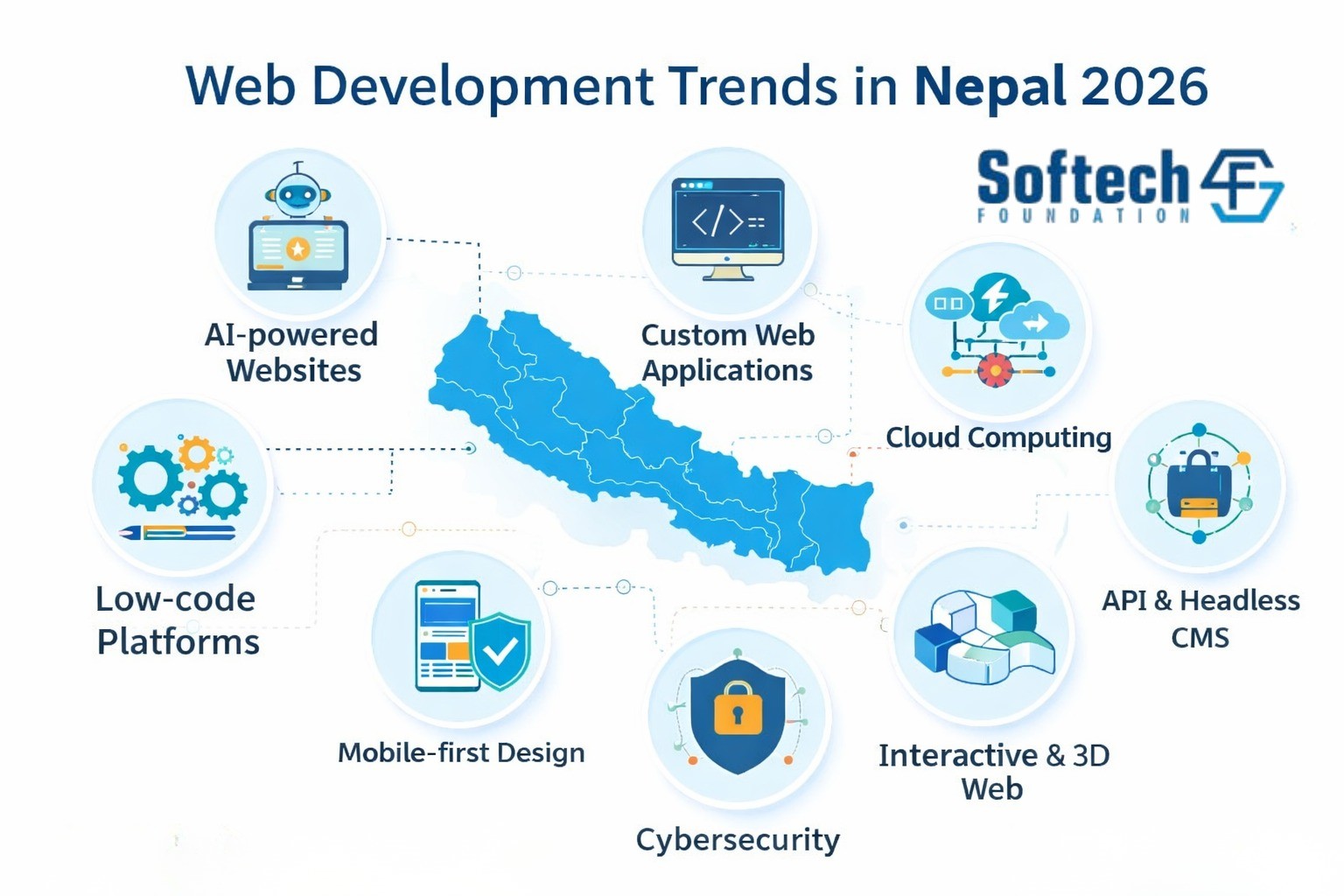
🌐 Web Development Trends in Nepal 2026
Read More..
Website vs Mobile App: Which One Does Your Business Really Need?
Read More..
What is Data Analytics?
Read More..